


Thermal resolution: 256, 384 or 640? What difference does it make?
When comparing thermal devices, sensor resolution is often the first specification highlighted. 256, 384, 640—the higher the number, the higher the price. But is the extra cost always justified?
This article explains what thermal resolution really means, the difference it makes in the field and when a 640 sensor offers a real advantage.
1. What is thermal sensor resolution?
Thermal sensor resolution is the number of thermal pixels capable of measuring a temperature difference. For example:
- 256 × 192 = 49,152 thermal pixels;
- 384 × 288 = 110,592 pixels;
- 640 × 512 = 327,680 pixels.
👉 Each pixel is a tiny temperature sensor. More pixels mean more thermal information in the image.
2. What resolution actually changes
Unlike a conventional camera, thermal resolution is less about how attractive an image looks and more about three key factors.
🔍 Identification distance
At a given resolution, a more distant subject occupies fewer pixels. A higher resolution helps retain a usable silhouette at longer distances.
🔎 Usable zoom
Digital zoom does not create detail: it enlarges existing pixels. The higher the base resolution, the more useful zoom remains before the image deteriorates.
🧠 Viewing comfort
A more detailed image is less tiring to view, quicker to interpret and better at revealing subtle movements.
3. A 256 sensor: effective entry-level performance
Who is it for?
- Short- and medium-range detection;
- Occasional use;
- Buyers with a limited budget.
Advantages
- Enough to spot a presence;
- Compact, lightweight devices;
- Lower power consumption.
Limitations
- Difficult long-range identification;
- Very limited zoom;
- An image that quickly becomes pixelated.
👉 A 256 sensor tells you something is there, but rarely exactly what it is.
4. A 384 sensor: a strong all-round choice
A 384 sensor is widely regarded as the thermal imaging sweet spot.
Why?
- A very good balance between price and performance;
- Digital zoom that remains usable;
- More reliable identification than a 256 sensor.
Ideal uses
- Active hunting;
- Hunting from a hide;
- Regular observation;
- Demanding users who want a proportionate investment.
👉 For many users, a well-optimised 384 device makes more sense than a poorly implemented 640 device.
5. A 640 sensor: when premium performance makes sense
A 640 sensor is not “too powerful”, but its capabilities often exceed what the user actually needs.
Real advantages
- Identification at very long distances;
- Comfortable digital zoom;
- A finer, more stable image;
- Better interpretation of thermal details.
Trade-offs
- A significantly higher price;
- Heavier devices;
- Excellent software processing is needed to make full use of the sensor.
👉 A 640 sensor becomes particularly worthwhile at long distances, alongside an LRF, and for frequent, demanding use.
6. The “more pixels means better” trap
This is the most common mistake. Two devices with the same resolution can produce very different images and perform very differently in poor weather.
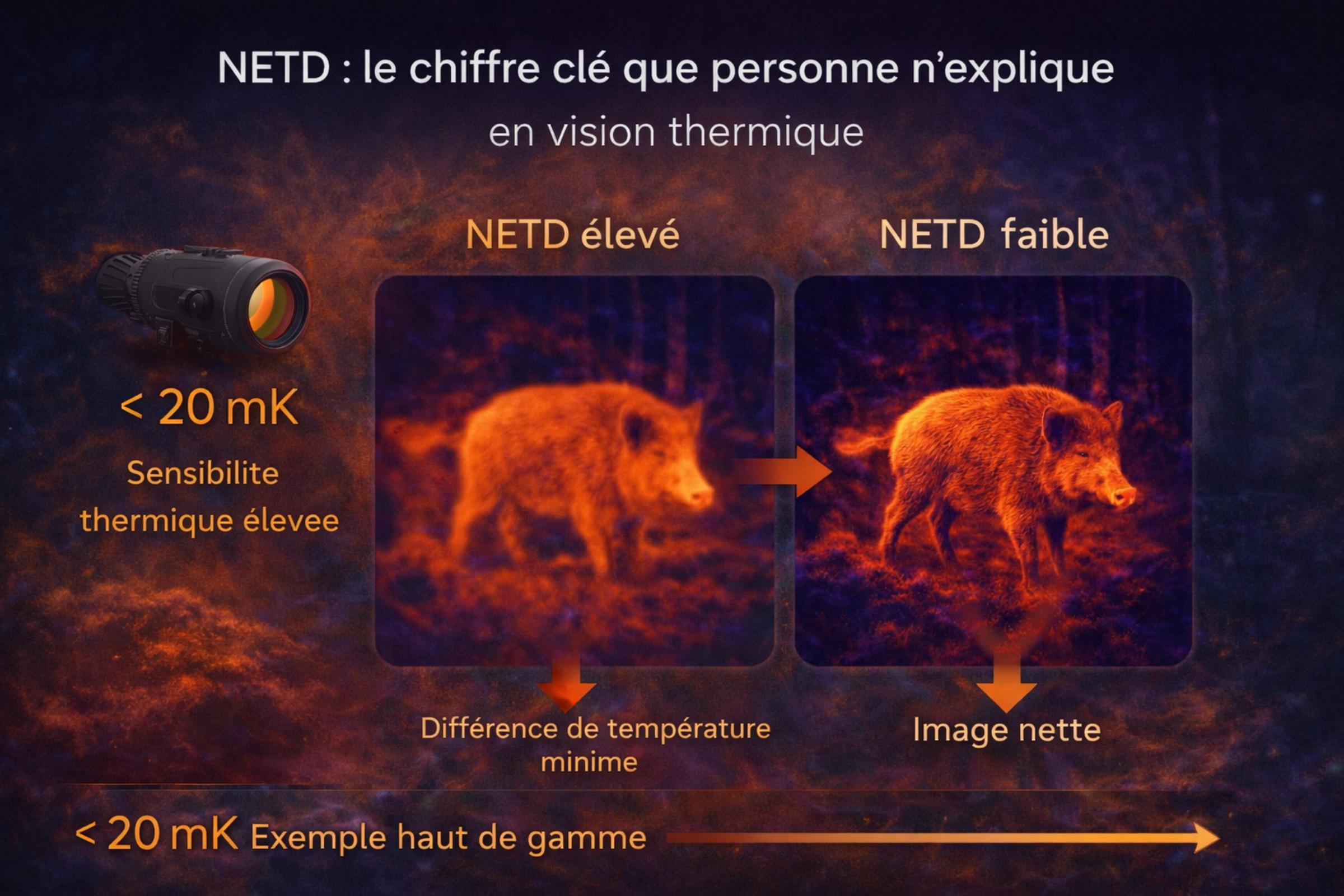
Why? Because resolution is only one factor. Other equally important factors include thermal sensitivity (NETD), optical quality, software processing, frame rate and device stability.
👉 A 384 device with NETD below 20 mK can outperform a 640 device with a high NETD.
7. Which resolution suits your use?
- Occasional use or a limited budget: 256.
- Regular, versatile use: 384.
- Intensive use, long distances or maximum precision: 640.
The right choice is the one that suits your actual use, not simply the highest number.
Conclusion
Thermal resolution matters, but should never be assessed in isolation.
- A 256 sensor enables detection.
- A 384 sensor offers a strong balance.
- A 640 sensor shows its full potential in demanding conditions.
👉 Understanding these differences helps you invest wisely without paying for performance you will not use.
🔎 Further reading
- NETD: the key thermal imaging figure explained
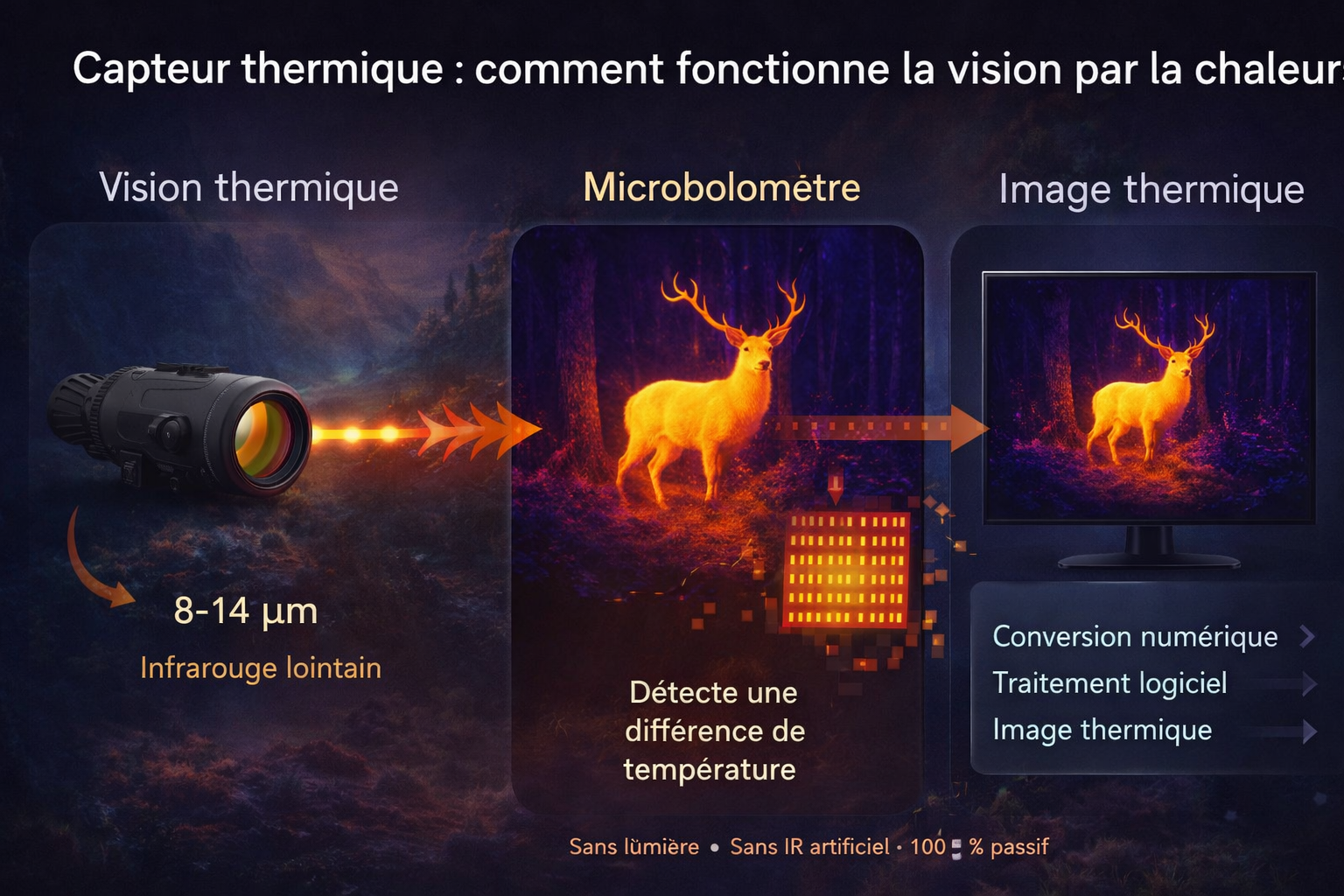
- Thermal sensors: how heat-based vision works
- Thermal imaging or night vision: which technology should you choose?

Leave a comment
All comments are moderated before being published.
This site is protected by hCaptcha and the hCaptcha Privacy Policy and Terms of Service apply.