

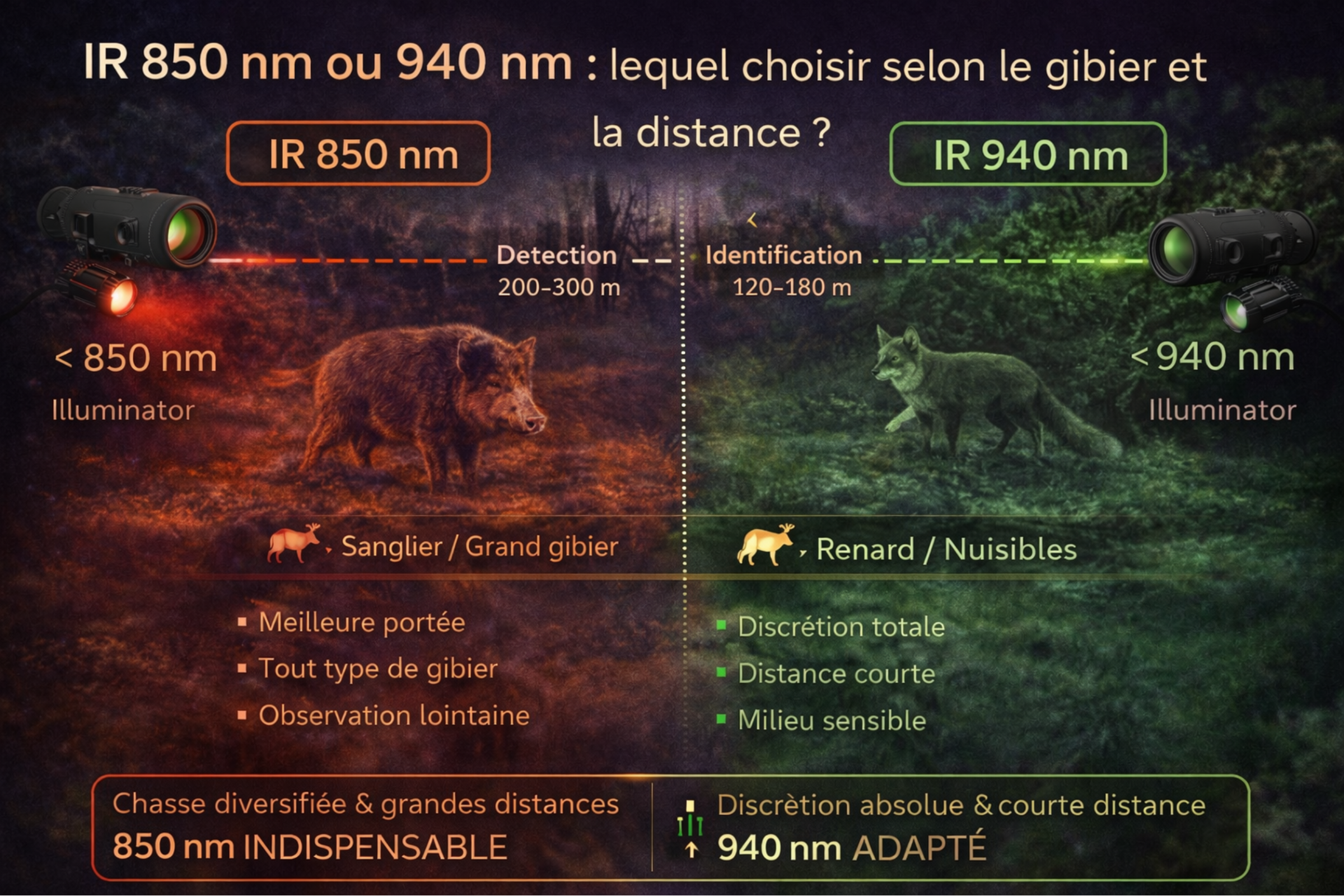
850 nm or 940 nm IR: which should you choose for night vision?
850 nm or 940 nm IR? Your infrared illuminator affects range, game identification and discretion. Learn which wavelength suits the game, hunting conditions and real distances in the field.
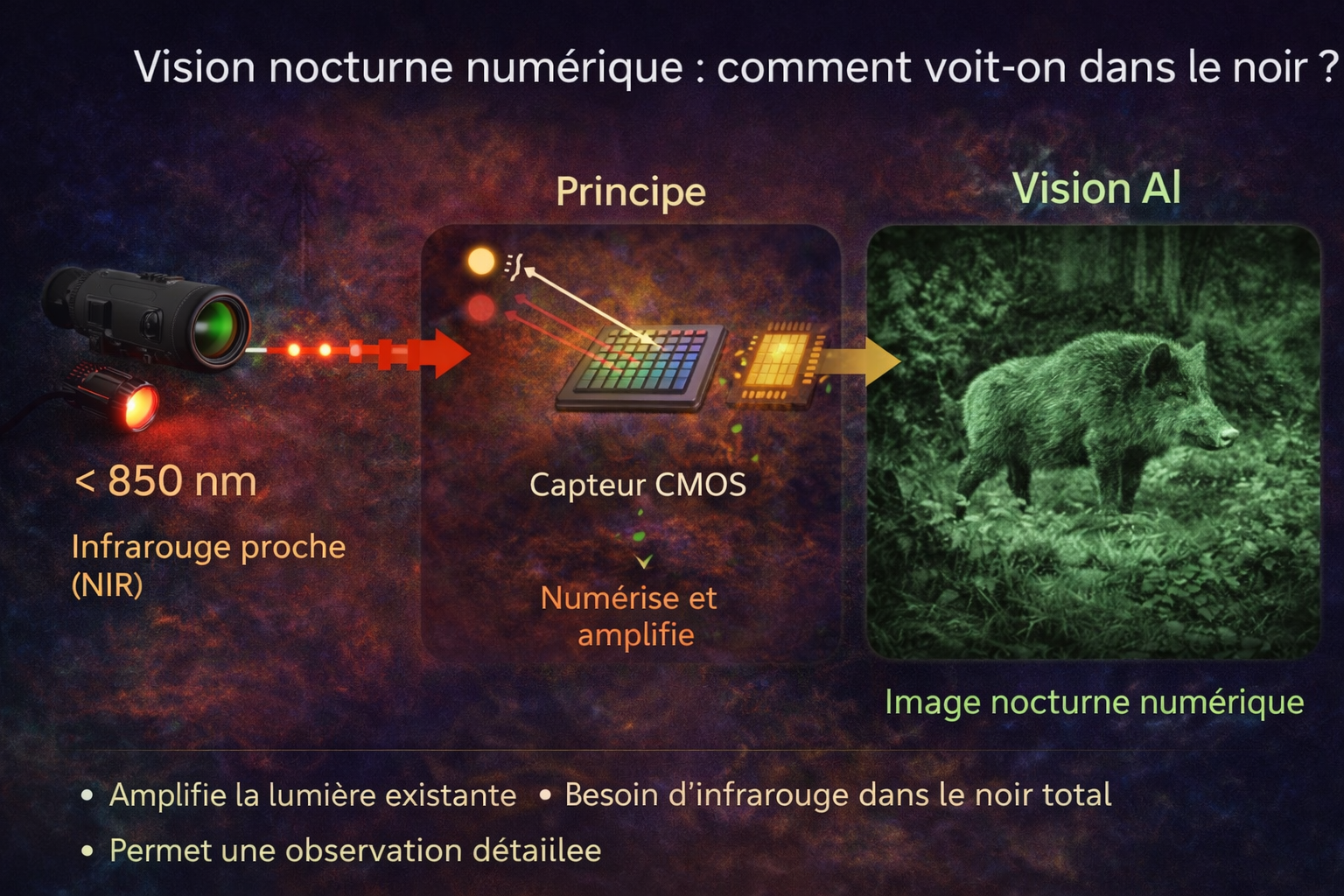
Digital night vision: how do we actually see in the dark?
Digital night vision does not detect heat: it amplifies available natural or infrared light. Learn how it works, its advantages for identification and its limitations compared with thermal imaging.
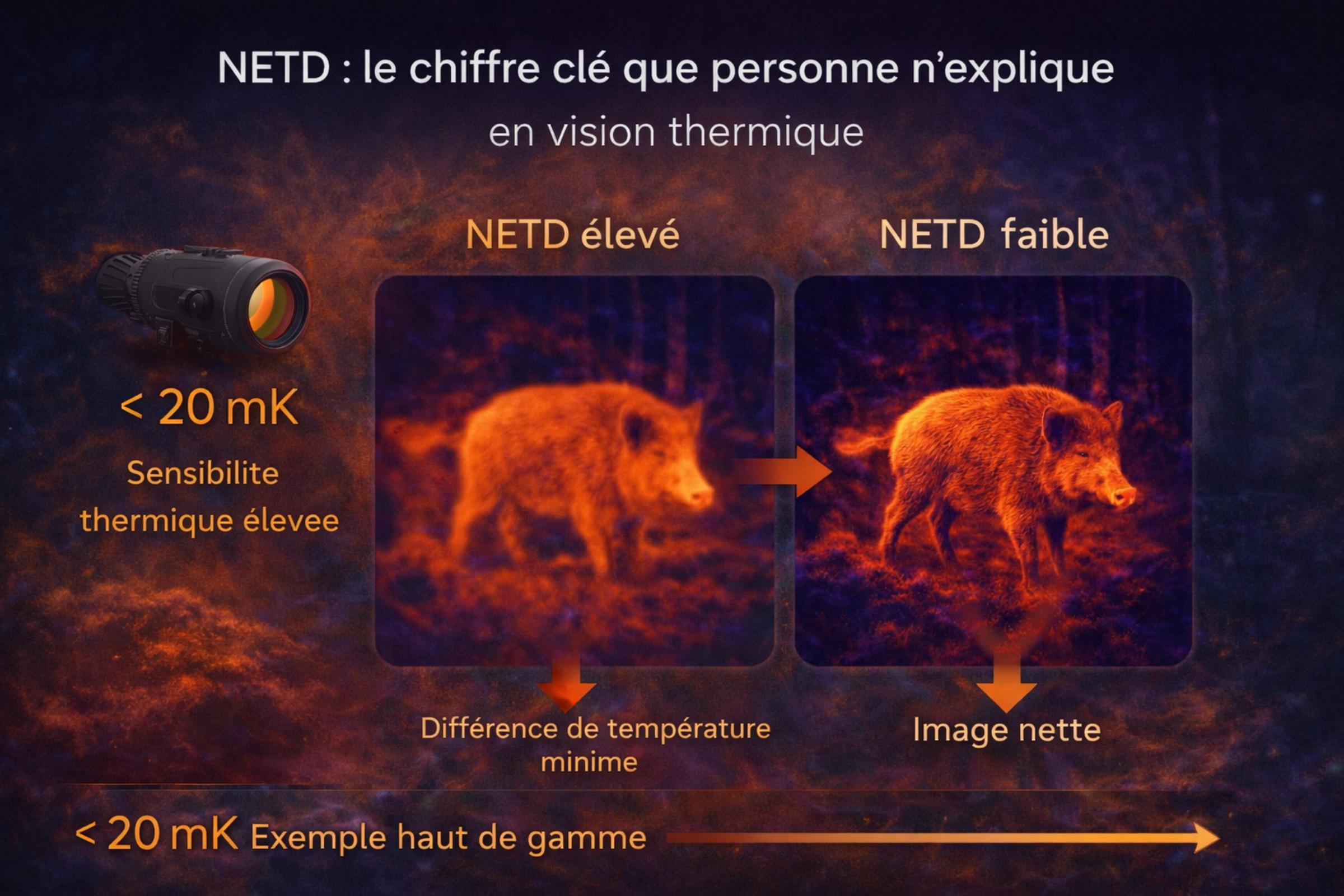
NETD: the key thermal imaging figure explained
NETD measures a thermal sensor’s sensitivity. Often overlooked, this figure directly affects image clarity, especially in poor weather. Learn why it can matter more than resolution.
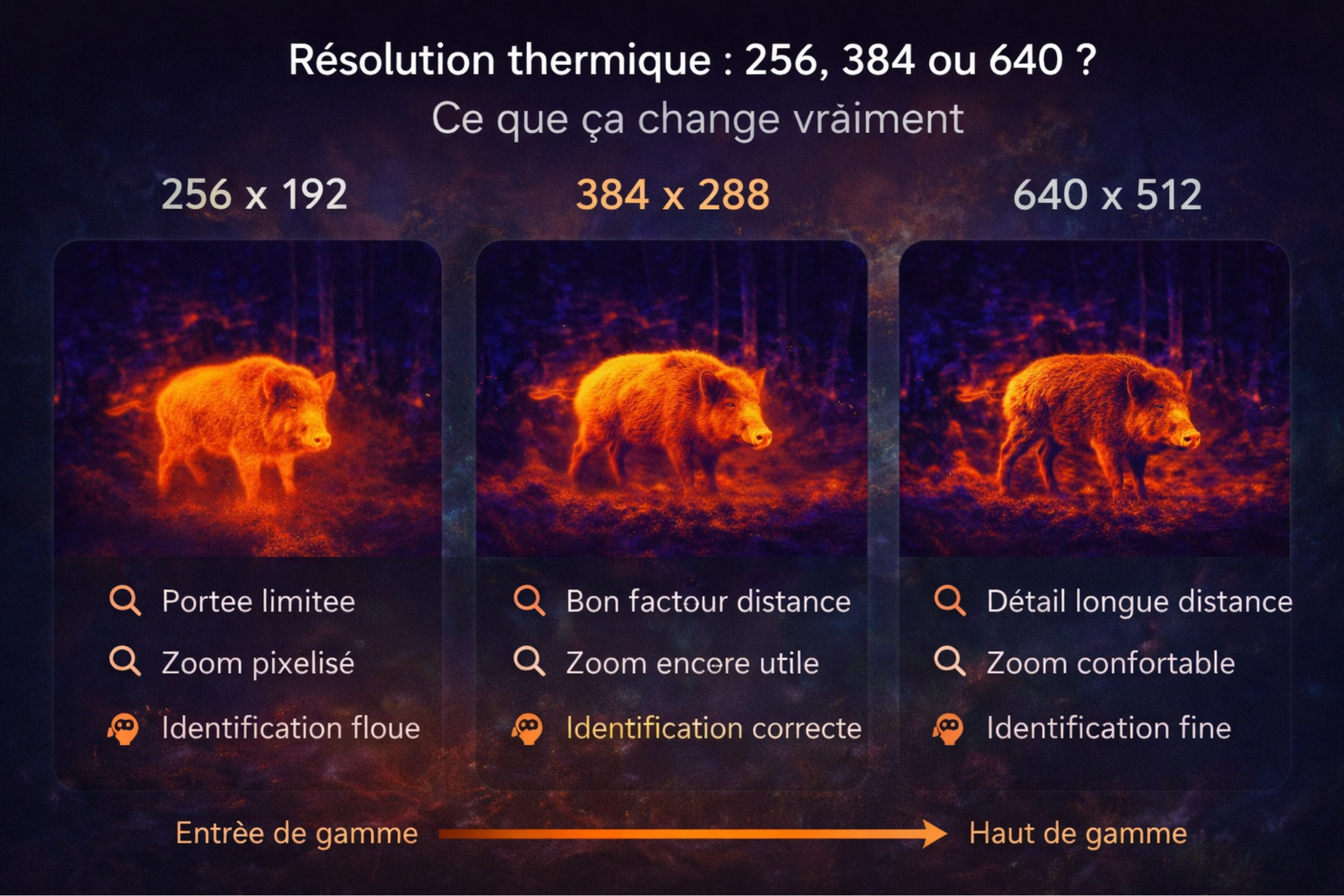
Thermal resolution: 256, 384 or 640? What difference does it make?
256, 384 or 640 pixels: thermal resolution directly affects identification range and viewing comfort. Learn what each resolution changes in the field and how to choose without overspending.
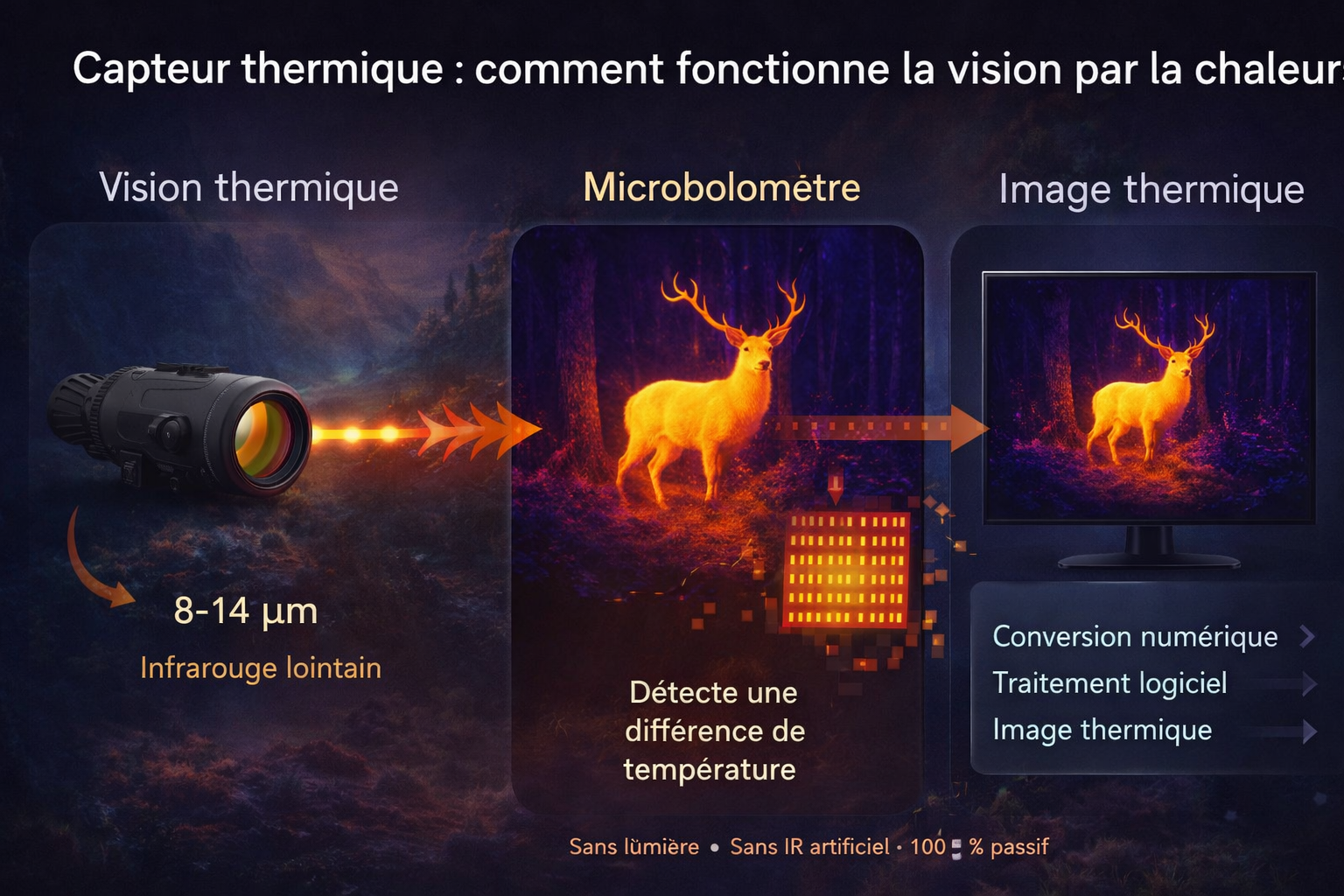
Thermal sensors: how heat-based vision works
Thermal sensors: how heat-based vision worksThermal imaging can seem almost magical: seeing in complete darkness, spotting subjects among vegetation, and sometimes observing in poor weather.Yet it ...

Understanding infrared technology: thermal imaging, night vision and lasers
Thermal imaging, night vision and lasers are often confused, even though they work on very different principles. This guide explains how each infrared technology works, what it does in the field an...